



Why documents get rejected abroad is a common concern for many applicants applying for visas, jobs, or education. Documents are often rejected not because they are fake, but because they do not meet the required attestation, legal, or verification standards of the destination country. Even small mistakes can also lead to delays or rejection.
Do you feel it is challenging?
It doesn’t need to be. This is a common,and many applicants go through it. By understanding why documents get rejected abroad, you can get it done smoothly.
Common Reasons Why Documents Get Rejected Abroad?
Many people are surprised when their documents get rejected abroad, even though they appear perfectly valid in their home country. The reason is simple foreign authorities do not evaluate documents based on how they look, but on whether they meet legal recognition and authentication requirements. For a document to be accepted internationally, it must follow a specific process that proves its authenticity across borders.
In most cases, a basic stamp, notary seal, or issuing authority signature is not enough. Countries often require a step-by-step attestation process, including verification from the home country, embassy or consulate legalization, and final approval from the foreign ministry in the destination country. Missing even one step, or completing them in the wrong order, can result in rejection—even if the document itself is genuine.
Here are the top reasons why documents get rejected abroad:
1.Incomplete Attestation or Legalization
One of the most common reasons documents are rejected is missing or incomplete attestation. Many applicants assume that once a document is issued by a government office, school, or hospital, it is automatically valid worldwide but this is not true.
For international use, documents must go through proper legalization, which may include:
- Apostille certification
- Embassy or consulate legalization
- Ministry-level authentication
- MOFA attestation
Timing is also critical. Some documents must be verified in the country of origin before being used abroad. If this step is missed, correcting the process later can be time consuming and costly, especially for those with visa or job deadlines.
2.Mismatch in Personal Details
Even a genuine document can be rejected if the details do not match the applicant’s other records. This is a very common issue.
Typical mismatches include:
- Differences in name spelling or format
- Missing middle names or initials
- Old or changed surnames
- Passport number inconsistencies
- Incorrect date formats
Authorities require exact identity matching. If there is any doubt, they may request additional proof, affidavits, or even reject the document until corrections are made.
3.Incorrect or Uncertified Translation
Translation plays a key role in document acceptance. If a document is not in the required language (such as English or Arabic), it must be translated correctly.
Common issues include:
- Use of non-certified translators
- Errors in names, dates, or titles
- Missing official stamps or approvals
- Incomplete translation of important details
Even small translation mistakes can change the meaning of a document and lead to rejection, especially for legal or visa purposes.
4.Damaged or Unclear Documents
Authorities usually require clear and verifiable documents. Problems arise when certificates are:
- Faded or difficult to read
- Laminated in a way that hides stamps or signatures
- Torn or damaged
- Too old to verify easily
In some cases, older documents from institutions that have closed or changed names may require additional verification or reissuance.
5.Wrong Document Type for the Purpose
Submitting the wrong type of document is another major reason for rejection.
For example:
- A hospital issued birth certificate instead of an official birth certificate
- A provisional certificate instead of a final degree
- A religious marriage certificate instead of a civil one
- A scanned copy instead of an original or certified copy
Different processes are required for different documents, and submitting incomplete or incorrect files can result in delays or rejection.
6.Different Rules for Different Countries
One of the biggest challenges is that every country has its own document requirements.
- Some countries accept apostille, others require embassy legalisation.
- Some accept digital documents, others require originals.
- Some require recently issued certificates.
- Others focus on strict authentication procedures.
This means a document accepted in one country may not be valid in another, simply due to different legal systems.
But can rejected documents be fixed?
The answer is yes in most cases, as many rejections are caused by procedural issues such as missing attestation, incorrect translation, or incomplete documentation, which can be corrected by following the proper steps and resubmitting the documents.
Just dig in to know how to fix it
How to Avoid Document Rejection?
To reduce the risk of rejection:
- Confirm the exact requirement for your purpose (visa, job, education, etc.).
- Follow the correct attestation and legalization process.
- Ensure all personal details match your passport.
- Use certified translation services.
- Submit the correct document type with supporting documents.
- Check that documents are clear, valid, and up to date.
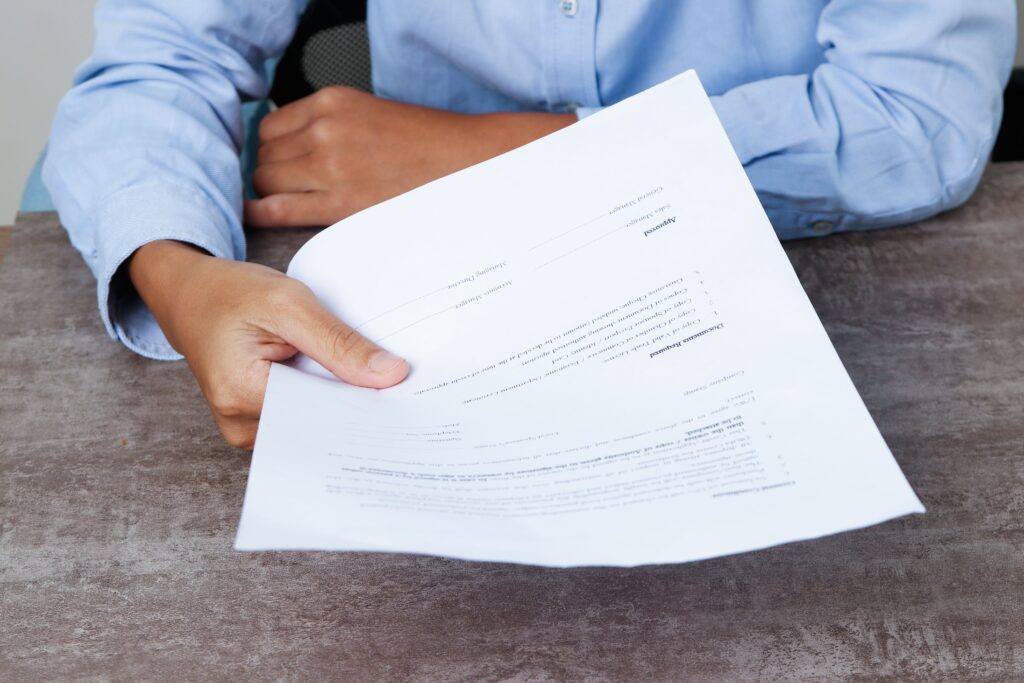
When Document Rejection Can’t Be fixed?
Common procedural mistakes, such as missing attestation, incorrect translation, incorrect document sequence, or incomplete supporting documents, can usually be corrected by following the proper legalisation steps again.
However, not all cases are easy to resolve. If the document contains incorrect information, cannot be verified by the issuing authority, shows signs of tampering, or comes from an unrecognized institution, then simple correction is not enough. In such situations, the document may need to be reissued or officially corrected before it can be accepted abroad.
A rejection does not always mean the end of the process; it usually means the document does not yet meet the required standards of the destination country. To avoid delays, always treat document preparation as a proper legal process or ask for support from trusted document clearing services . When your documents are correctly prepared and verified from the start, approval becomes faster, smoother, and more reliable.
Wrapping Up
Getting your certificates accepted abroad is not just about submitting documents—it is about ensuring proper legal recognition through the correct process. If your certificate is intended for international use, it should always be treated as a formal legal procedure rather than simple paperwork.
When your documents follow the exact attestation, translation, and legalization requirements of the destination country, the entire process becomes much smoother. This reduces delays, avoids unnecessary rejections, and helps your visa, job, or education application move faster.
In the end, the more accurately your document process aligns with the rules of the receiving country, the fewer complications you will face at the final stage. Proper preparation is the key to successful international document acceptance.
Are you looking for a trusted document clearing services in dubai?
Please call: 8007327 (UAE TOLL FREE) . Telephone: +971 555732821